Ausstellung, Humboldt Forum, Berlin
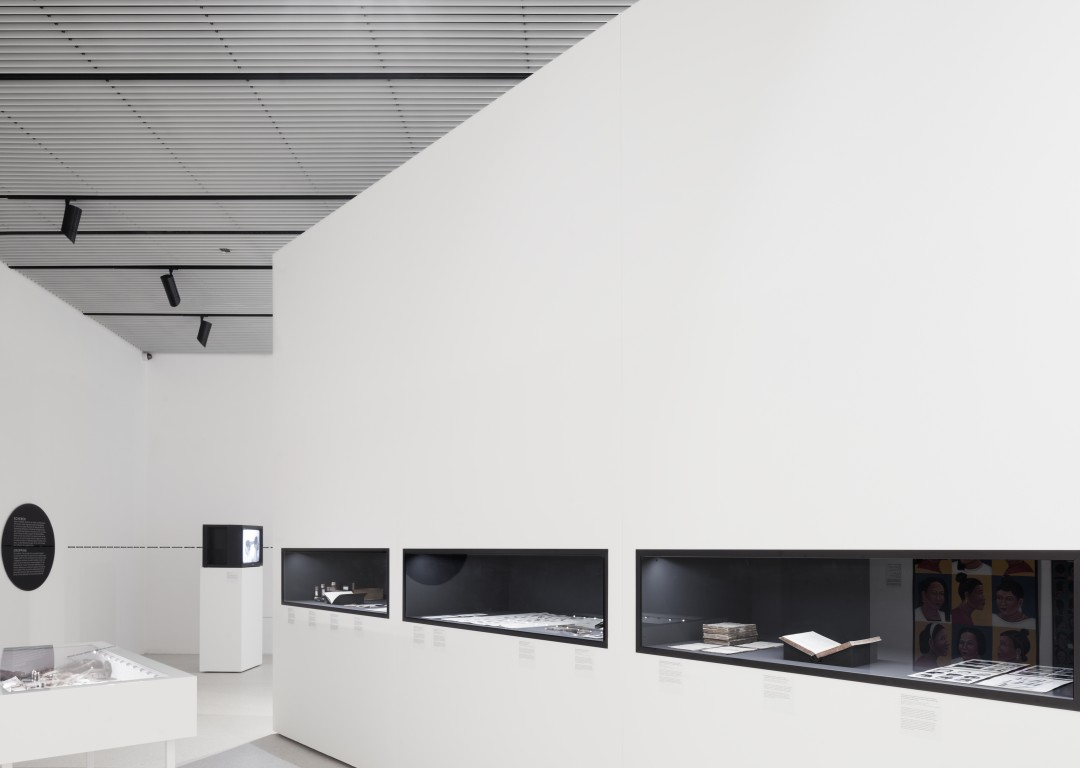
Die Ausstellung Geschichten Tansanias thematisiert die vielschichtige Geschichte des Gebiets des heutigen Tansania und die langfristigen Folgen kolonialer Herrschaft. Während der deutschen Kolonialherrschaft waren Unterdrückung, Ausbeutung und Gewalt prägende Erfahrungen. In dieser Zeit gelangten tausende kulturelle Zeugnisse nach Deutschland. Die Ausstellung fragt, welche Geschichten diese kulturellen Belongings erzählen – und aus welchen Perspektiven. Im Zentrum stehen die Sichtweisen der Herkunfts-Communities in Tansania. Die Ausstellung wurde kollaborativ entwickelt und versammelt eine Vielzahl von Erzählungen, Stimmen und Perspektiven. Vertreterinnen und Vertreter von Communities aus verschiedenen Regionen Tansanias kommen in Texten, filmischen Interviews und künstlerischen Beiträgen selbst zu Wort.
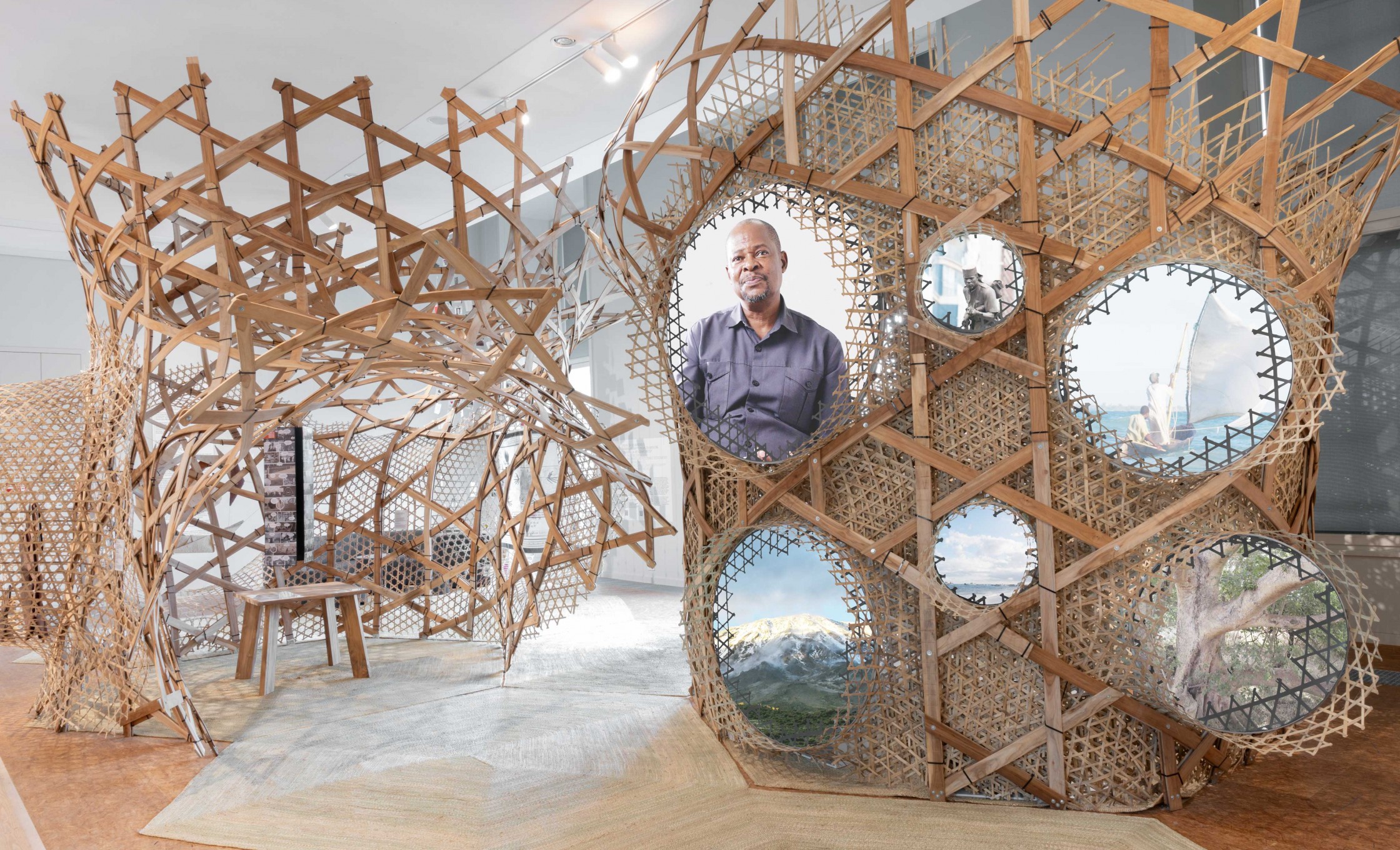
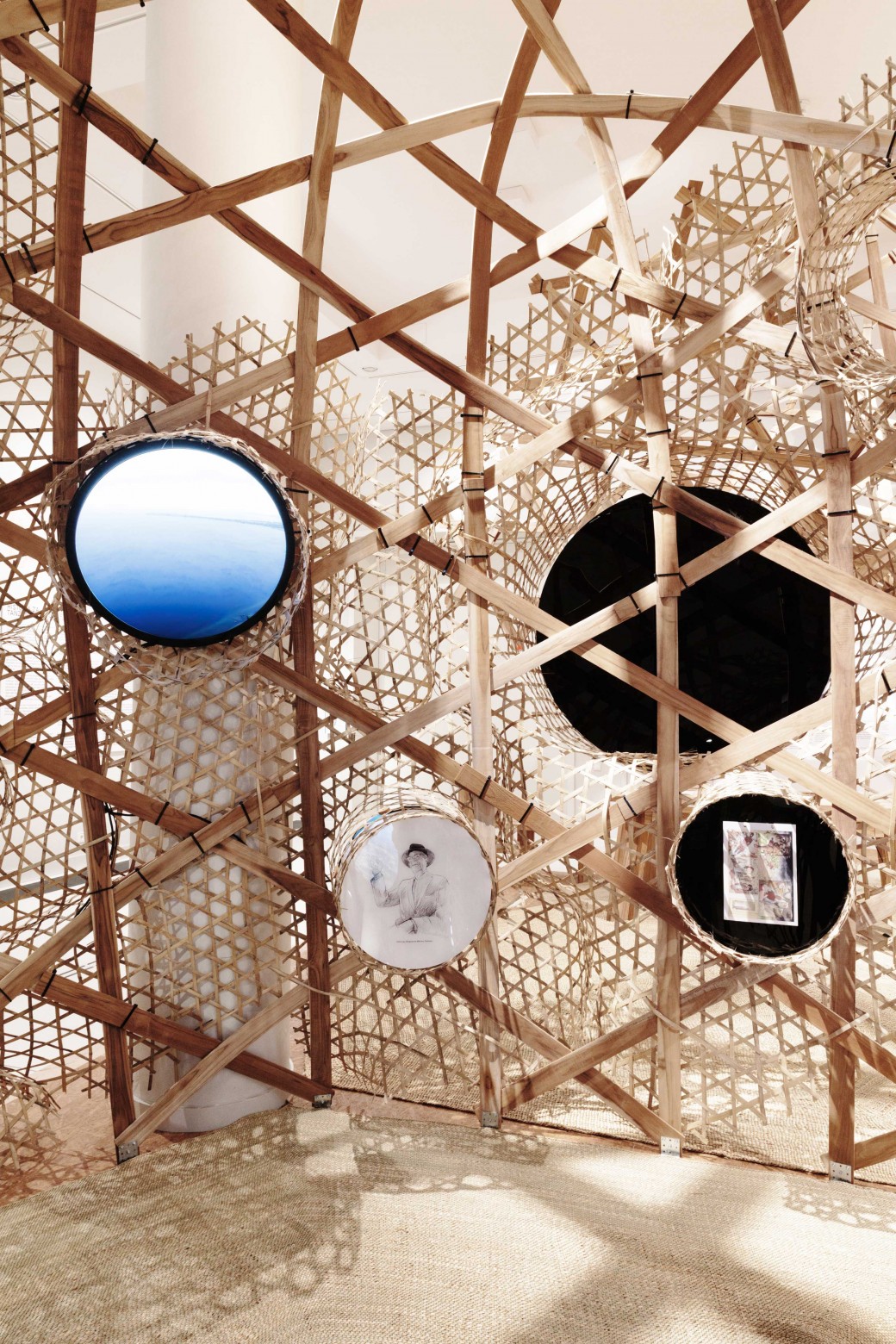
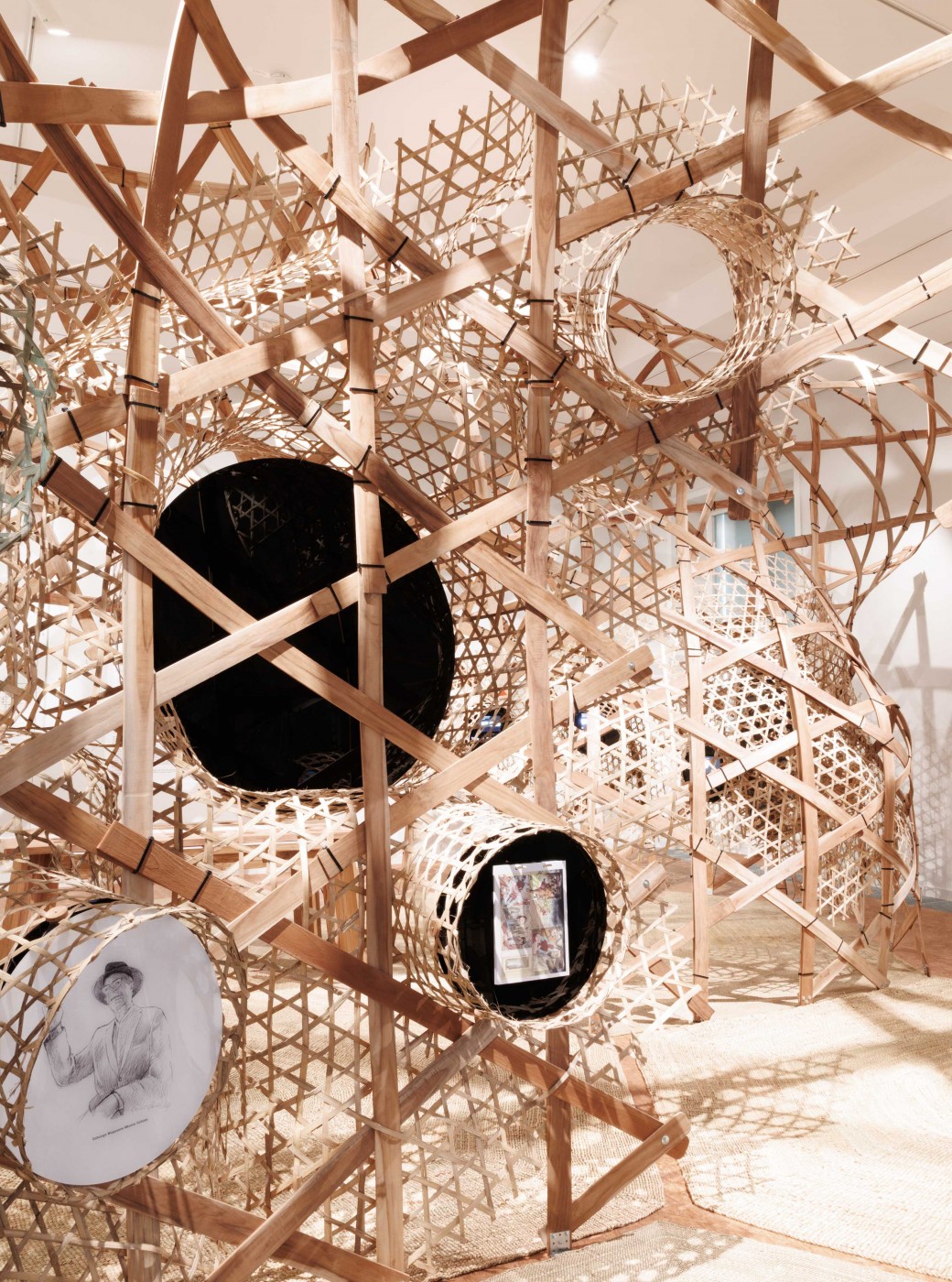
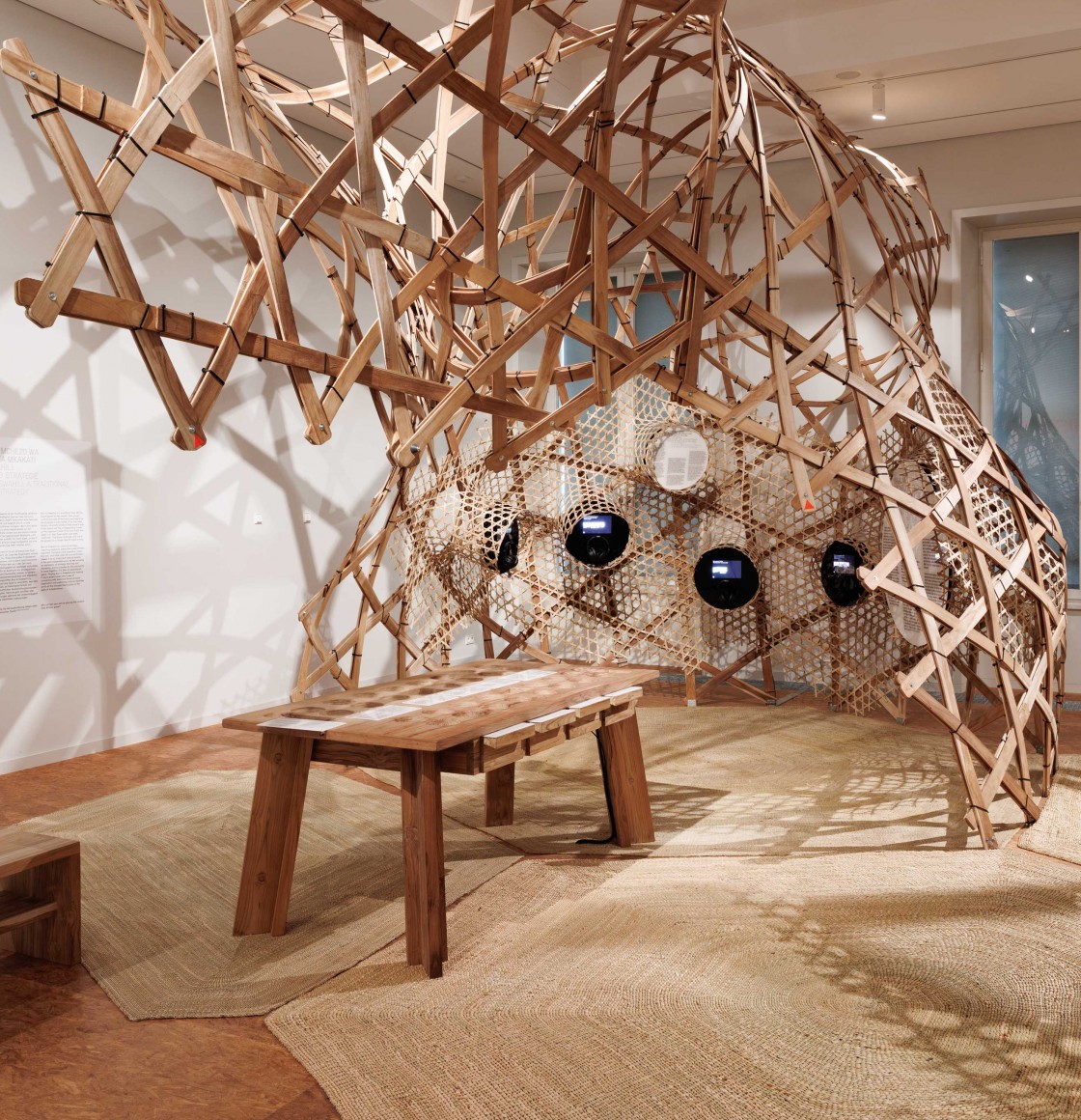
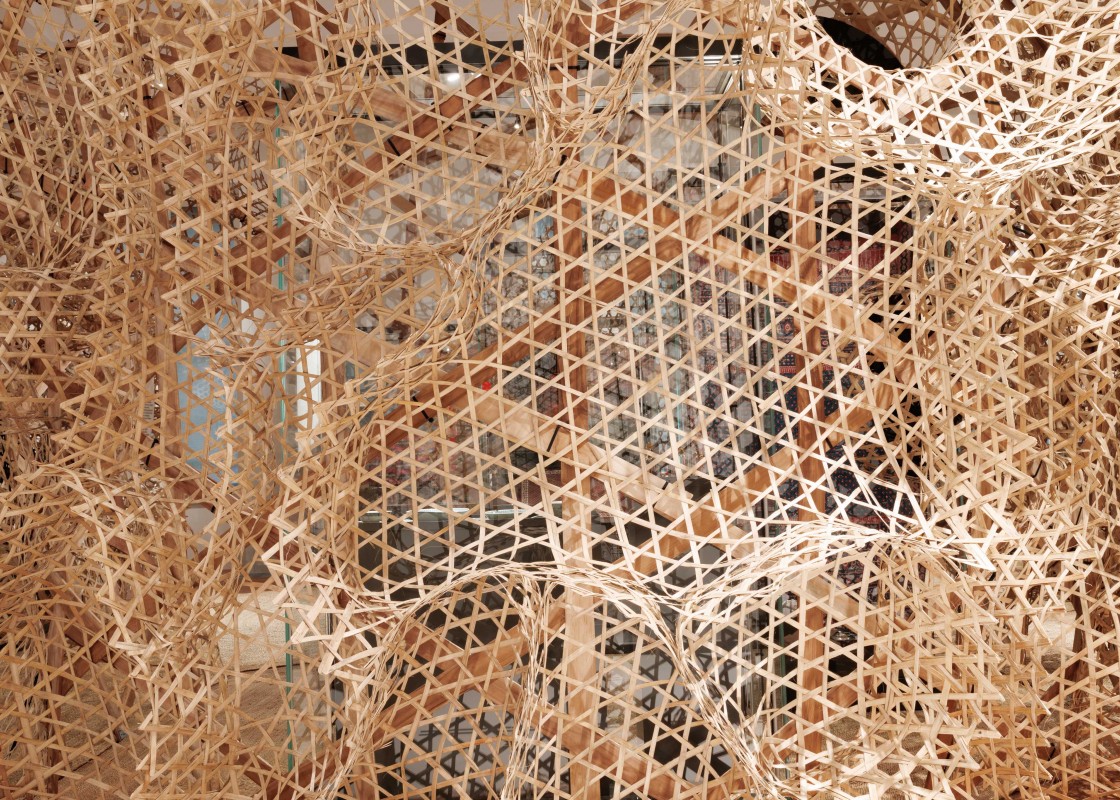
Zentrales räumliches Element ist eine aus Teak und Bambus gefertigte Geflechtstruktur, die auf lokalen Handwerkstechniken basiert. Sie strukturiert den Ausstellungsraum, schützt sensible Inhalte und ermöglicht zugleich eine sinnliche und räumlich erfahrbare Annäherung an die ausgestellten Inhalte. Die Struktur wurde in Tansania gefertigt und in Berlin von tansanischen Handwerkern zusammengesetzt.
Ausstellung, Humboldt Forum, Berlin
The central spatial element is a woven structure made of teak and bamboo, based on local craft techniques. It structures the exhibition space, protects sensitive content, and at the same time enables a sensory and spatially experiential approach to the exhibited content. The structure was manufactured in Tanzania and assembled in Berlin by Tanzanian craftsmen.
TheGreenEyl entwickelte eine speziell auf diese Architektur abgestimmte Medientechnik, die Grafik und audiovisuelle Inhalte direkt in das Geflecht integriert. In die Struktur eingelassene runde Bildschirme zeigen sprechende Porträts, ergänzt durch Interviews und atmosphärische Filmaufnahmen. Die mediale Erzählebene basiert auf umfangreichen Recherchereisen und Gesprächen mit Communities vor Ort und übersetzt diese Begegnungen in eine vielstimmige Ausstellungsdramaturgie. Die vernetzte Medieninstallation ist so choreografiert, dass die portraitierten Menschen nicht parallel sprechen, sondern in einen dialogischen Ablauf treten. Stimmen, Bilder und atmosphärische Aufnahmen greifen ineinander und erzeugen eine immersive Erzählung.
TheGreenEyl developed media technology specifically tailored to this architecture, integrating graphics and audiovisual content directly into the mesh. Round screens embedded in the structure show talking portraits, supplemented by interviews and atmospheric film footage. The media narrative is based on extensive research trips and conversations with local communities, translating these encounters into a polyphonic exhibition dramaturgy. The networked media installation is choreographed so that the people portrayed do not speak in parallel, but enter into a dialogical sequence. Voices, images, and atmospheric recordings intertwine to create an immersive narrative.